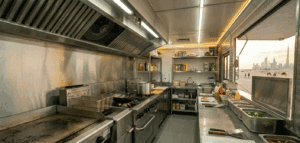
A complete food truck equipment checklist covers cooking gear (grill, fryer, oven), refrigeration, a generator, prep tables, a sink, fire safety equipment, ventilation, and POS tools. In the UAE, you also need an air-conditioning unit for the climate. Dunes Trailers fits all essential equipment into every custom build.
Starting a food truck isn’t just about finding the right vehicle. The real challenge comes from selecting essential cooking equipment that fits your compact space while meeting strict food safety standards.
After watching countless mobile operators struggle with equipment choices, I’ve learned one crucial lesson. Your success depends on understanding your exact cooking requirements before investing in large appliances that might not fit your mobile kitchen.
The Complete Food Truck Equipment Guide
1. Understanding Your Food Truck Foundation
Your mobile kitchen becomes both your greatest asset and tightest constraint. Square footage isn’t just about space—it’s about managing pressure when customers line up and you’re cooking six orders at once.
Many operators face a tough choice between a full-size range and a griddle. Most realize their menu demands both, leading them to optimize with countertop units that enable faster workflow without traditional bulk.
The real challenge isn’t just buying equipment. It’s accepting that your food truck’s success hinges on selecting tools that let you cook efficiently while preventing your operation from becoming cramped chaos.
2. Essential Cooking Equipment for Your Food Truck
Core Cooking Appliances
Here’s the hard truth most won’t tell you: budget expectations clash with reality when buying equipment. Many operators devote their entire allocation trying to optimize every corner, only to discover that buying used equipment from discounted outlets saves significant money.
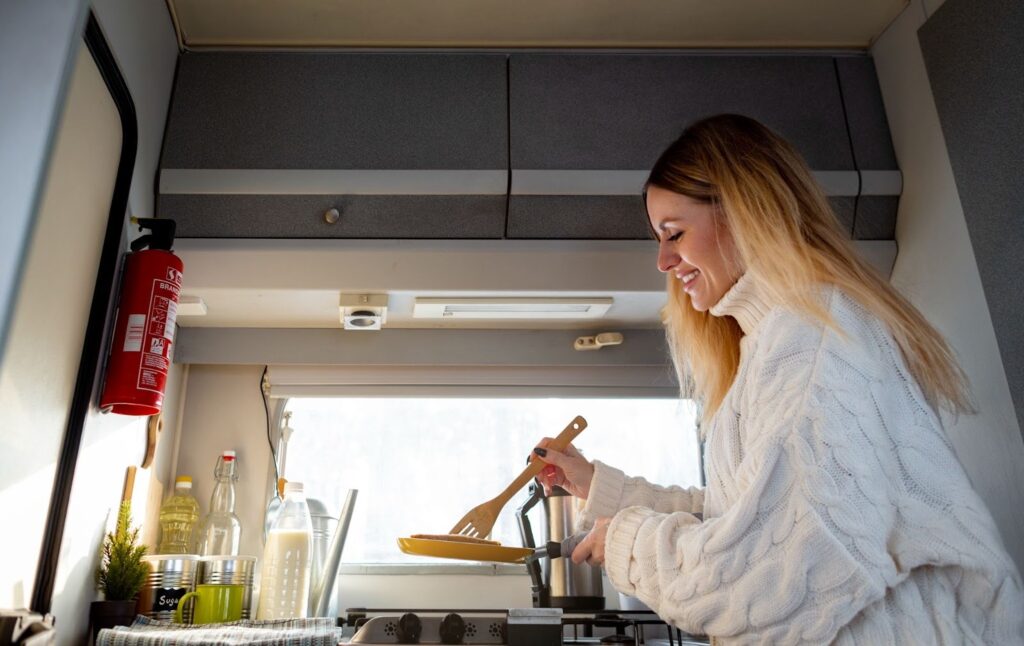
- Griddle or Flat Top Grill:Your flat top grill becomes ideal for cooking popular items like pancakes, burgers, eggs, and vegetables. This workhorse appliance handles high-volume cooking during peak hours.
- Commercial Range:A quality range lets you pan fry, saute, boil, and simmer proteins and sauces simultaneously. This versatility makes it essential for diverse menus.
- Charbroiler:Want those signature grill marks and grilled flavor on chicken and steaks? A charbroiler delivers what customers expect from quality grilled items.
Supporting Kitchen Equipment
| Equipment Type | Primary Use | Budget Range |
| Deep Fryer | French Fries, Chicken tenders,Onion rings | $800-$2,500 |
| Griddle | Burger,pancakes,egges | $1,000-$3,000 |
| Convection Oven | Baking. Roasting | $1,500-$4,000 |
| Range | Multipurpose Cooking | $1,200-$3,500 |
| Microwave | Reheating slides, Steaming vegetables | $200-$600 |
- Fryer:A commercial fryer remains essential for many food trucks. It lets you cook popular menu items like french fries, chicken tenders, and onion rings quickly.
- Microwave:Don’t overlook this simple appliance. A microwave can reheat sides and steam vegetables efficiently during busy service periods.
- Toaster:Perfect texture for bread, sandwiches, breakfast items, waffles, English muffins, and bagels comes from a quality commercial toaster.
- Salamander or Cheese Melter:This specialized equipment browns tops of foods like open-face sandwiches and efficiently melts cheese on casseroles and macaroni.
Ventilation and Safety
Your food truck exhaust hood must remove dangerous grease vapors produced by cooking equipment. This isn’t optional—it’s a health code requirement that protects both you and customers.
Equipment Budget Overview: Between $5,000-$15,000 covers most cooking items, depending on your menu requirements.
This kitchen equipment represents your biggest investment. It’s essential for operations and your ability to generate profit. Choose high-quality, durable equipment from reliable sellers. Research these purchases carefully, especially mixers, ovens, and knives.
3. Warming and Holding Equipment
Keeping prepared foods at safe temperatures without overcooking presents challenges most mobile operators underestimate. Holding equipment transforms menu items from soggy disappointments into perfect offerings.
Quality warming units prevent the nightmare where customers walk away because your signature chicken turned cold while you cook fresh orders. Budget appropriately since these units enable seamless operations during festivals when you’re cooking large quantities yet need everything kept warm.
4. Food Preparation Equipment
Having the right prep tools isn’t just about cramming equipment into limited space. It’s about understanding that prep stations form the operational backbone where menu items transform into profit.
Budget Allocation: Plan $1,000-$2,000 for this category.
Essential Prep Tools
Quality prep equipment prevents bottlenecks that kill efficiency. Whether you’re staging ingredients for lunch rush burgers or portioning sauces for signature sandwiches, proper tools make the difference.
Stainless steel tables serve dual purposes as both work surfaces and storage solutions with built-in shelving. Keep spatulas and tongs within arm’s reach to support workflows that enable seamless service.
Your mobile kitchen requires dedicated surfaces, measuring cups for precision, and sharp cooking knives that won’t fail mid-service. Size your pots and pans appropriately for your operations.
5. Smallware and Cooking Utensils
Basic Kitchen Tools
Knives and cutting boards form your baseline. But skillets, frying pans, and sauce pans handle the actual transformation of ingredients into menu items.
These versatile pieces let you pan fry, saute, steam, reduce, simmer, or boil as your culinary vision demands. Turners flip burgers and vegetables with equal efficiency.
Specialized Equipment
A blender or food processor tackles smoothies, salsa, and sauces when texture matters. These aren’t luxuries—they’re menu enablers.
Thermometers aren’t optional. They’re your safeguard against foodborne illness and health inspection violations. They ensure proteins reach safe temperatures while keeping operations compliant.
Stock spoons, ladles, tongs, and a knife rack to store everything safely. Quality purchases from reliable sellers prove worth the upfront investment since replacement costs drain budgets faster than equipment failures.
6. Serving Equipment and Disposables
Here’s the reality most vendors miss until day one: customers expect quality presentation even from a mobile business.
Your serving setup needs essential supplies like sturdy utensils and dining containers that don’t collapse under heat. Include versatile items for everything from salsa to soups.
Budget Estimate: $500-$800 initially for serving supplies.
Stock plenty of liners, napkins, and cup options. Running out mid-service kills workflow faster than broken equipment. Unlike durable cooking appliances, these single-use items require constant restocking.
7. Commercial Refrigeration Equipment
The equipment that keeps your ingredients at safe temperatures becomes the invisible guardian of your business. I’ve watched costs balloon when operators skip careful evaluation of their storage needs.
Used commercial refrigeration units sometimes demand constant replacing of fragile components. This turns a nimble operation into a budget-draining nightmare.
Choosing the Right Refrigeration
The space available in your truck dictates whether you’ll maximize efficiency with compact under-counter coolers or invest in full-size solutions. This crucial decision affects every aspect of your menu.
Your refrigeration capacity determines the quality of fresh vegetables and proteins you can store. It also impacts the range of prepared servings you’ll safely keep before serving customers.
Budget Range: $3,000-$8,000 depending on your operation’s scale.
Choose reliable units that won’t require you to close mid-service. The overhead of maintaining temperamental cooling systems will exceed your initial investment. Having correct durable equipment proves vital to avoiding health code violations.
In this environment where every inch counts, the ability to keep food at the right temperature isn’t negotiable. It’s the requirement that enables your entire business to generate profit while protecting customers.
8. Storage and Organization Solutions
When square footage becomes your most vital constraint, every inch transforms into a crucial puzzle piece demanding attention.
Maximizing your limited space isn’t about stuffing random supplies into corners. It’s about choosing essential equipment that serves double duty while keeping ingredients within arm’s reach.
Smart Storage Strategies
Undercounter units allow you to store both frozen items and prep materials beneath work surfaces. Compact racks mounted on walls help organize everything from knives to cutting boards without sacrificing floor area.
Planning your layout ahead prevents the nightmare where you can’t locate crucial cooking utensils or sanitizing chemicals mid-service. Maintain accessible storage for disposable supplies, aluminum wrap, and portion cups.
This preparation means you’re always ready when customers arrive. You’ll never run out of what enables you to cook efficiently while meeting food safety standards.
9. Cleaning and Sanitation Supplies
Behind every successful food truck lies an unglamorous truth: handling food sanitarily demands more than just cooking prowess. It requires relentless commitment to hygiene.
While most entrepreneurs obsess over griddles and fryers, cleaning supplies often become budgetary afterthoughts. Yet these items keep customers safe from foodborne illness and health inspection violations.
Essential Cleaning Products
Your stainless steel surfaces, cutting boards, and food prep equipment become breeding grounds without proper sanitization protocols.
Unlike brick-and-mortar restaurants with ample storage room, your limited mobile space means every cleaning tool must maximize efficiency.
Critical cleaning supplies include:
- Sanitizing sprays
- Degreasing agents
- Disposable cleaning cloths
- Food-safe surface cleaners
- Handwashing stations
From wiping down countertop units between orders to ensuring your exhaust hood remains grease-free, these products form the invisible foundation. They allow your operation to meet high-quality food safety standards while keeping your business running smoothly.
The investment might seem small compared to your truck or cooking equipment. But skimping on cleaning supplies is a gamble that could close your business before it truly launches.
10. Additional Considerations
Beyond budgeting and preparation, every mobile food business owner discovers something crucial. Safeguarding customer health through good personal hygiene and health code compliance becomes the cornerstone of sustainability.
Eco-friendly choices in disposable cutlery, tin foil, and take-out containers might seem like minor details during launch. However, these ongoing cost decisions directly impact both your overhead costs and operational freedom.
As you operate across festivals, neighborhoods, and cities with your mobile operation, these choices compound. They affect your bottom line and your reputation as a responsible business owner.
Final Thoughts on Food Truck Equipment
Launching a food truck means accepting that equipment selection defines your operational reality. The truck itself is just the starting point.
Everything hinges on understanding your exact cooking requirements before investing in large appliances. Choose equipment that enables you to cook efficiently while meeting food safety standards.
Remember that your mobile kitchen becomes both your greatest asset and tightest constraint. Make every equipment choice count, prioritize quality over quantity, and plan your layout before making purchases.
With the right equipment foundation, your food truck business can thrive in any location while delivering the high-quality food customers expect from mobile vendors.
Ready to start your food truck journey? Visit Dunes Trailers to explore custom mobile kitchen solutions designed for success.